
Swords: The Path from Action to Enlightened Outcome
The Swords suit, traditionally associated with the element of Air, is often seen as the realm of intellect, communication, and conflict within conventional Tarot orthodoxy. However, our unique interpretation pivots from this norm, emphasizing the suit as the dynamic arena of action and tangible effort. Beginning with the Ace of Swords, which we interpret not just as a moment of mental clarity but as the inception of decisive, action-oriented work, this journey fundamentally reorients the suit’s narrative towards the physical realization of ideas and ambitions. This departure from traditional readings highlights the active pursuit of goals, the direct engagement with challenges, and the strategic navigation through obstacles as the essence of the Swords’ path. Such a focus on action over contemplation, on the tangible steps taken to overcome adversity rather than the intellectual or communicative strategies typically underscored, marks a significant shift in interpretation. Culminating in the Ten of Swords, we confront not only the consequences of our actions but also the opportunity for renewal and strategic redirection, emphasizing resilience and success achieved through work and action. This approach provides a fresh perspective on the Swords suit, celebrating the power and necessity of action in the journey toward achieving one’s goals.
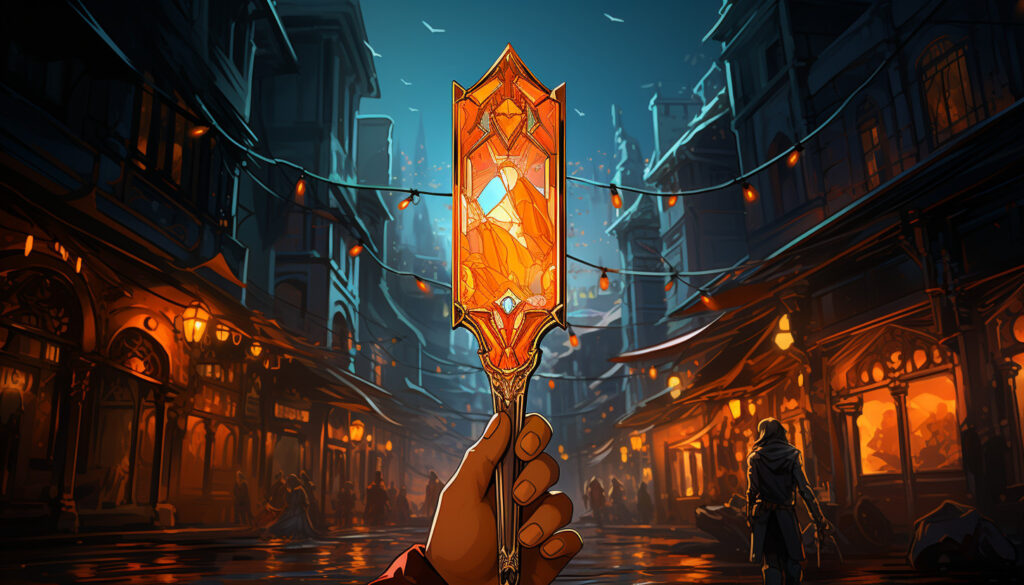
Ace of Swords:
Signifies a breakthrough in understanding or the start of intellectual challenges, symbolizing clarity of thought and decisive action.
Ten of Swords:
Often seen as a card of betrayal or end of a difficult cycle, suggesting the need to confront the truth and start anew.
Four Card Group 2 to 5:
This phase of the Swords suit confronts the intellectual and communicative challenges encountered at the onset of new ideas or conflicts. It represents the mental engagement necessary for problem-solving, decision-making, and the articulation of thoughts and beliefs. This stage is marked by the sharpening of the mind, the necessity of choice, and the sometimes painful reality of consequences, reflecting the initial encounter with and navigation of intellectual or communicative hurdles.
The sequence commences with the Two of Swords, a stalemate that requires a decision, illustrating the initial paralysis of action. The Three of Swords reveals the heartache that can follow difficult decisions or truths, a necessary pain for growth. The Four of Swords offers a pause for rest and recuperation, a necessary respite to gather strength. The Five of Swords warns of the cost of victory, where conflicts and moral choices test integrity.

Four Card Group 6 to 9:
The narrative continues with the deepening complexity of thought, strategy, and communication. This segment explores the resolution of conflicts, the clarity gained through struggle, and the attainment of wisdom or the reconciliation of opposing ideas. It underscores the transformative power of adversity, the refinement of beliefs through testing, and the liberation that comes from decisive action and the resolution of doubts, leading to a deeper understanding of truth and justice.
The Six of Swords represents a transition towards a more hopeful future, a journey away from turbulence towards peace. The Seven of Swords suggests the use of strategy and sometimes deceit; a reminder that not all battles are fought openly. The Eight of Swords symbolizes feeling trapped by one’s thoughts or circumstances, challenging one to free oneself from self-imposed limitations. The Nine of Swords confronts the darkest fears, urging a confrontation with anxiety and worry to pave the way for clarity and resolution.
Four Face Cards Group:
In the court cards of the Swords suit, the focus shifts to the mastery of intellect, communication, and ethical judgment. This journey reflects the growth from curious inquiry to adept analysis and ethical leadership. It encapsulates the evolution from the pursuit of knowledge and clarity, through the challenges of ethical decision-making, to the attainment of intellectual authority and the ability to guide others with wisdom and integrity, highlighting the maturation of the mind and spirit in navigating life’s moral and intellectual landscapes.
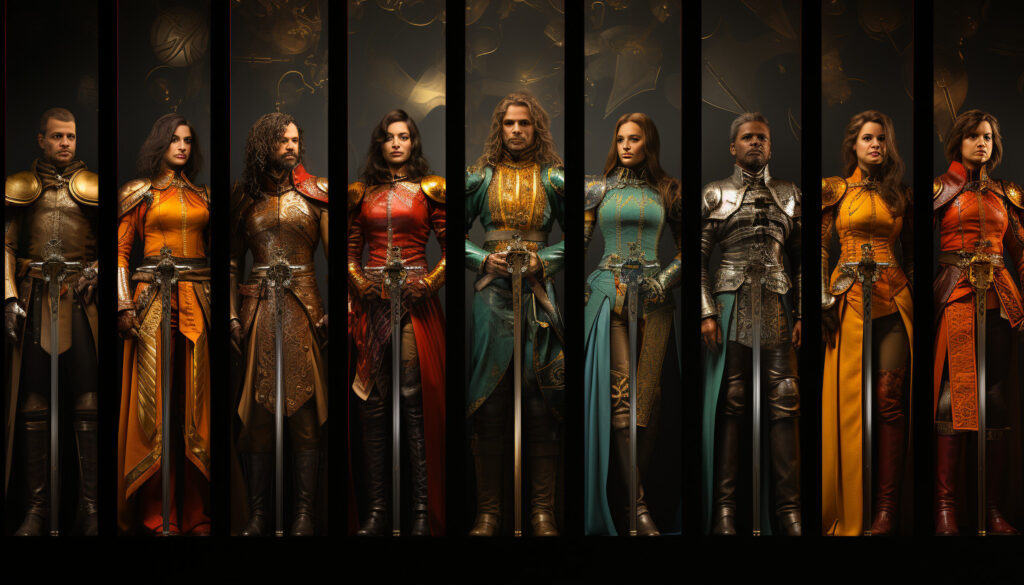
Page of Swords: Represents curiosity and a readiness to explore ideas and challenge assumptions.
Knight of Swords: Embodies the aggressive pursuit of goals, using intellect and communication as tools.
Queen of Swords: Symbolizes clear thinking and independence, cutting through deception to see the truth.
King of Swords: Stands for authority in intellectual matters, offering judicious and analytical leadership.